Table of contents
Clomiphene citrate, sold as Clomid, has been a first-line ovulation-induction medication for more than half a century. It still works for many people who take it, but the numbers behind it are more nuanced than the headline success rates suggest. For women with anovulatory infertility due to PCOS, current ASRM and ESHRE guidelines now recommend letrozole as the preferred first-line treatment, while clomiphene remains an important option for many women without PCOS. Here is clomiphene by the numbers, updated for 2026.
The headline numbers
Clomiphene in four figures.
The core gap
Ovulating is not the same as conceiving.
The single most important fact about clomiphene is the gap between its two success rates. It triggers ovulation in roughly 80% of users, but only about a third conceive, and fewer carry to a live birth. That difference reflects multiple factors, including age, sperm quality, tubal patency, embryo quality, and clomiphene's anti-estrogen effects on cervical mucus and the endometrium, per StatPearls (NIH).
Approximate funnel from ovulation to live birth on clomiphene. Sources: StatPearls (NIH); clinical literature (ovulation 57% to 91%, pregnancy 27% to 40%).
Age matters most
Per-cycle odds fall steeply with age.
In the largest analysis of clomiphene with intrauterine insemination, covering 4,199 cycles, the pregnancy rate per cycle dropped from 11.5% under age 35 to 1.0% above 42, per Dovey et al. (2008).
Pregnancy rate per completed clomiphene + IUI cycle, by age. Source: Dovey et al., Fertility and Sterility (2008).
Over a full course
Cumulative odds tell the same story.
Across an entire course of treatment, the same age gradient holds. Cumulative pregnancy rates fell from about 24% under 35 to under 2% above 42, which is why clomiphene with IUI is rarely the right tool past the early 40s.
Cumulative pregnancy rate per patient treated, by age. Source: Dovey et al., Fertility and Sterility (2008).
| Age group | Per cycle | Cumulative |
|---|---|---|
| Under 35 | 11.5% | 24.2% |
| 35 to 37 | 9.2% | 18.5% |
| 38 to 40 | 7.3% | 15.1% |
| 41 to 42 | 4.3% | 7.4% |
| Over 42 | 1.0% | 1.8% |
Clomiphene + IUI pregnancy rates by age. Source: Dovey et al. (2008).
The big shift
For PCOS, letrozole now wins.
The most consequential finding in this area is that for polycystic ovary syndrome, the most common cause of ovulation problems, the newer drug letrozole produces more live births than clomiphene. In the landmark PPCOS II trial, letrozole beat clomiphene on both ovulation and live birth, and current ASRM and ESHRE guidelines now recommend it as first-line for PCOS.
Cumulative rates in women with PCOS over up to five cycles. Source: Legro et al., PPCOS II, New England Journal of Medicine (2014).
A different answer
For unexplained infertility, the picture differs.
The picture is different for unexplained infertility. In the AMIGOS trial, clomiphene and letrozole produced similar live birth rates, while injectable gonadotropins led on live births but carried substantially more multiple pregnancies. There is no single best drug; the right choice depends on the diagnosis.
Live birth rate by treatment in unexplained infertility. The difference between clomiphene and letrozole was not statistically significant; gonadotropins led but produced far more multiples. Source: Diamond et al., AMIGOS, New England Journal of Medicine (2015).
The multiples question
More twins than letrozole.
Clomiphene's main downside is multiple pregnancy. Across 16,001 insemination cycles, clomiphene produced more twins and triplets per pregnancy than letrozole, even though its overall pregnancy rate was slightly higher.
Multiple pregnancy rate per pregnancy, 16,001 IUI cycles. Source: Fertility and Sterility (2015).
When it works, it works early
Most success comes in the first three cycles.
Clomiphene pregnancies cluster early. The large majority of successes occur within the first three cycles, which is why treatment is generally capped at about six ovulatory cycles before moving on.
Approximate share of treatment pregnancies by cycle. Sources: clinical IUI cycle data; StatPearls (NIH).
The basics
Clomiphene at a glance.
| Property | Detail |
|---|---|
| Drug class | Selective estrogen receptor modulator (SERM) |
| FDA approved | 1967 |
| Typical dose | 50 mg daily for 5 days |
| Ovulation timing | About 5 to 10 days after the last dose |
| Ovulation rate | 57% to 91% |
| Pregnancy rate | 27% to 40% |
| Recommended maximum | About 6 ovulatory cycles |
Side effects, by frequency.
| Side effect | How common |
|---|---|
| Hot flashes | Common (around 10%) |
| Bloating or abdominal discomfort | Common |
| Mood changes | Common |
| Visual disturbances | Uncommon (about 1% to 2%) |
| Ovarian hyperstimulation (OHSS) | Rare |
Source: StatPearls (NIH) and clinical literature. Frequencies vary by study and population.
How it works
A half-century-old trick on the brain.
Clomiphene is a selective estrogen receptor modulator, a chemical cousin of the breast-cancer drug tamoxifen. It blocks estrogen receptors in the hypothalamus, so the brain reads estrogen as low and ramps up the hormones that drive follicle growth and ovulation. That same anti-estrogen action is also part of why ovulation rates run ahead of pregnancy rates: the drug can thin cervical mucus and the uterine lining at the same time it triggers ovulation. The takeaway: clomiphene makes most people ovulate, but the odds of a live birth depend heavily on age and diagnosis, and for PCOS guidelines now put letrozole ahead of it.
Clomiphene makes most people ovulate. Far fewer go on to a live birth.
Sources: Clomiphene, StatPearls (NIH); Dovey et al., Fertility and Sterility (2008); Legro et al., PPCOS II, NEJM (2014); Diamond et al., AMIGOS, NEJM (2015); and Fertility and Sterility (2015) on multiple pregnancy. Figures are rounded and vary by study and population.
Fact Checked
Dr. Mohammed A. Fouda, MD
Dr. Fouda is a Neurosurgery research scholar. His work focus primarily on Brain tumor behavior and quality of life of cancer patients as well as biomedical engineering and medical device innovation.

How OneTwenty Works
Not your average
Checkup.
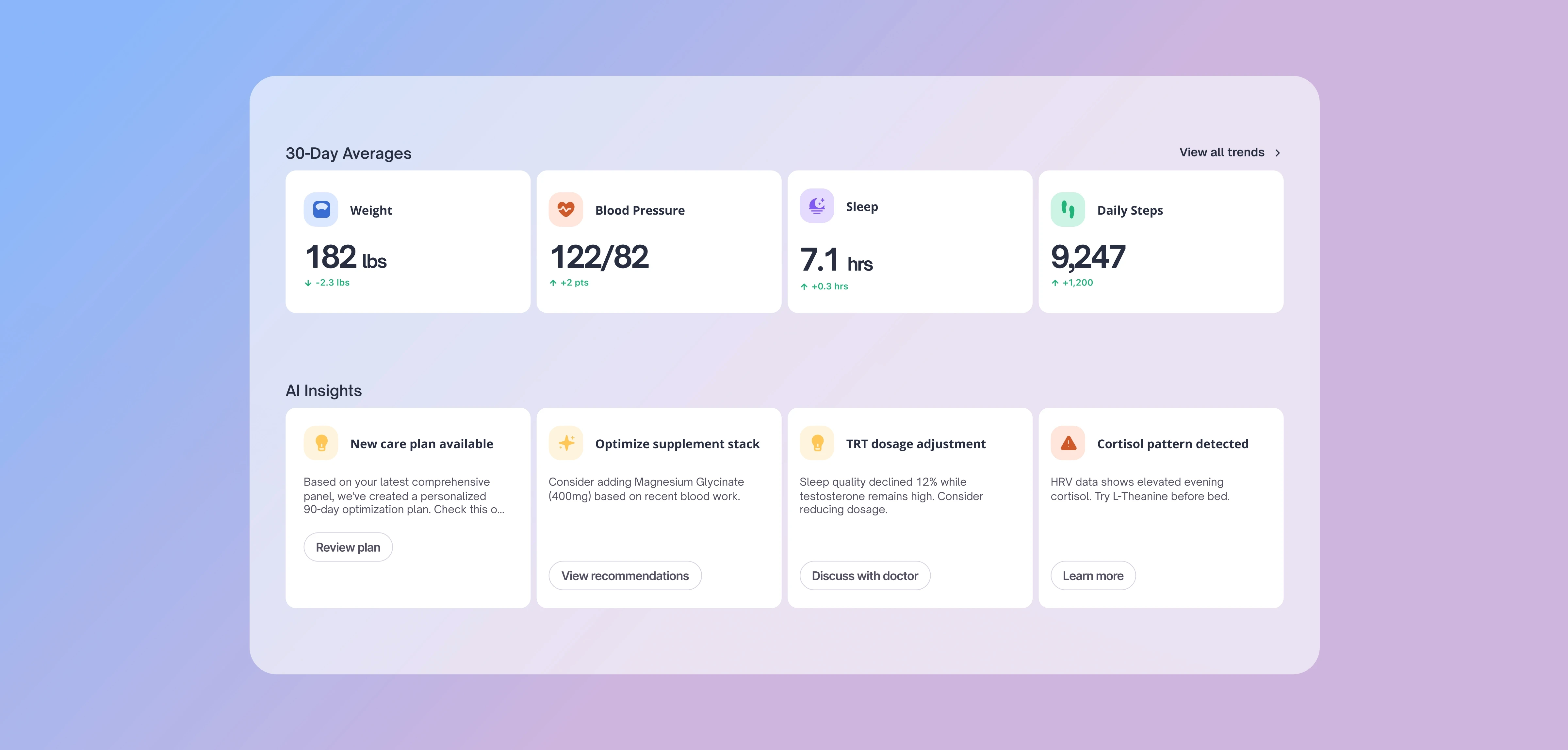
Every life stage brings new biological demands. Tracking the right metrics at the right time helps you adapt, optimize performance, and extend both lifespan and healthspan.
Your Annual Physical
Manual Data Processing
Guesswork Trend Detection
Once-a-year physical
Reactive, tested when sick
No data between visits
Once a year testing
Delayed Results
One-size dosing, set and forget
Real-Time Trend Insights
Daily smart-device data
Automated Data Sync
Quarterly Biomarker Tests
Optimal, personalized targets
Plain-language AI insights
Medications titrated to your data
Built to extend healthspan

Frequently Asked Questions
Clarity before
you commit
Answers on setup, scale, and support to remove blockers.